
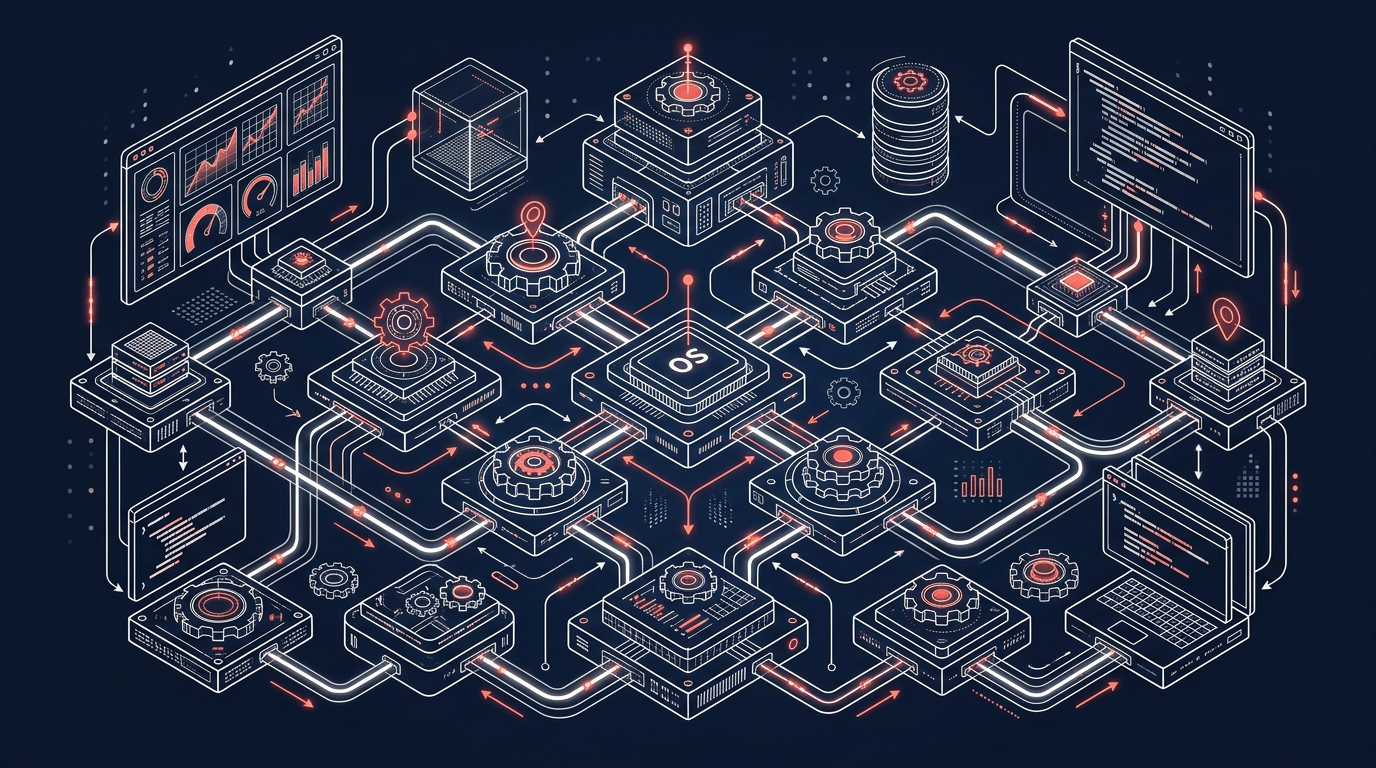
Six months ago I started building what I call the Agency OS, an AI-powered operating system that runs my entire consulting practice. Not a tool I use occasionally. The actual operating layer that sits beneath every client interaction, every report, every strategic decision.
I want to be transparent about what this is, because the concept sounds bigger than the reality. And the reality is more useful than the concept.
The Problem I Was Solving
Running a solo consultancy across Shopify, Meta, Google, and Klaviyo for multiple clients creates an information management problem. Each client has its own context: brand voice, KPI targets, seasonal patterns, competitive landscape, stakeholder preferences. Holding all of that in my head worked at two clients. At four, it started to crack.
I needed a system that could remember everything I'd learned about each client, surface the right context at the right moment, and automate the repetitive parts of my work without losing the strategic nuance.
What the System Actually Does
The OS has three layers. First, a knowledge base for each client: brand positioning, product catalogues, audience profiles, competitor analysis, channel configurations. This isn't a static document dump. It's structured context that gets pulled into every working session.
Second, persistent memory. When I discover that a particular creative angle works for a client, or that their CEO prefers data presented a certain way, or that a specific Klaviyo segment underperforms, the system remembers. Next session, that knowledge is already there.
Third, skill-based workflows. Recurring tasks like monthly reporting, ad performance audits, campaign building, and creative analysis are codified as repeatable skills. I trigger them, provide the inputs, and the system handles the execution using the client's specific context.
What Surprised Me
The biggest gain wasn't speed, though that matters. It was consistency. Before the OS, the quality of my output depended on my energy level, how many clients I'd already worked on that day, whether I remembered a specific data point from three months ago. Now the system compensates for my human limitations.
The second surprise was how much it changed client conversations. When I can pull a cross-platform performance snapshot in seconds during a call, or reference a decision we made four months ago with exact context, the trust dynamic shifts. Clients notice when you remember everything.
What Didn't Work
Early versions tried to automate too much of the strategic layer. I'd have the system generate recommendations without enough human judgment in the loop. The outputs were plausible but sometimes missed the political or practical constraints that only I knew about. I pulled back and repositioned AI as the execution engine, with me as the editorial layer.
Why This Matters Beyond My Practice
The solo operator model (one senior person running a tight practice with AI infrastructure) is going to become far more common. The economics are compelling. You get senior-level thinking, full contextual awareness, and operational speed that used to require a team of five.
I'm not saying everyone should build what I built. But if you're a solo consultant still managing client knowledge in your head and producing reports by hand, the gap between you and an AI-augmented competitor is going to widen quickly.